
Emergency sewer line repair in Aurora, IL
When emergency sewer line repair in Aurora IL is needed, the first sign is often sewage backing up through a floor drain, shower, or toilet, several drains failing at once, or a sewage smell that will not go away. This page explains what to do right now, what those signs can mean in Aurora, and how calling works. Sewer Line Repair is a referral service: when you call, you are connected with an independent local provider, and you confirm licensing, insurance, and pricing directly with that provider before work begins.
Working hours: 24/7
What to do right now
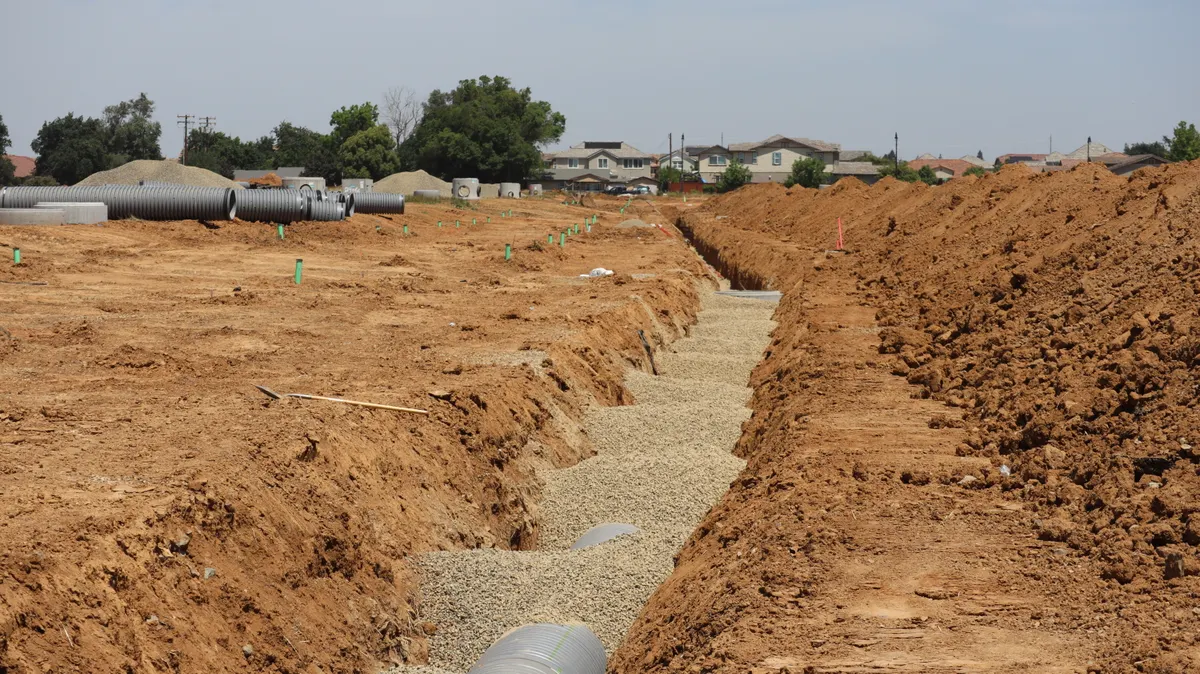
If sewage is backing up in Aurora, limit water use right away: do not run the washing machine or dishwasher, and avoid flushing toilets that are already affected. Water added to the system has nowhere to go when the main line is blocked, so every extra flush or load can push more sewage up through the lowest drain in the home. Keep children and pets away from any standing sewage, and avoid contact with it, since sewage carries bacteria and other contaminants that should not be handled without protection.
Next, note what you can see without opening anything up. Which fixtures are affected, and in what order did the problem appear? Is sewage coming up through one drain or several? Does the trouble change when water is used elsewhere in the home, or did it start after heavy rain? These details help the provider understand whether the problem is in a single fixture line or in the main line serving the whole home, and they help you get connected with the right kind of help when you call.
Call (607) 376-4949. Working hours: 24/7. Say Aurora and your ZIP code, describe what you are seeing, and we will connect you with an independent local provider. Emergency help in Aurora is about getting connected quickly, not about a promised arrival time. The provider you are connected with can explain what to do about water use while you wait and what the first visit is likely to cover.
Symptoms and likely causes in Aurora
| What you notice | Likely cause to discuss with the provider |
|---|---|
| Sewage backing up from a low drain or toilet | A blockage or restriction in the main line serving the home |
| Several drains slowing at the same time | A shared line problem rather than a single fixture trap |
| Gurgling toilets or drains when water runs elsewhere | Air movement caused by a partial restriction in the line |
| A sewage smell indoors or near a drain | A dry trap, a vent issue, or a leak or break in a line |
| A soggy or sunken patch in the yard | A leaking section of line, or ground settling around it |
| Trouble that returns after a drain clears briefly | Roots, a damaged section, or a recurring restriction that needs inspection |
These pairings are starting points for the conversation, not a diagnosis. Only an inspection of the line itself can show what is actually happening inside it.
Local sewer factors in Aurora, Illinois
Aurora is the second-largest city in Illinois, sitting on the Fox River west of Chicago, with most of the city in Kane County and parts extending into DuPage, Kendall, and Will counties. Its downtown and near-east neighborhoods grew up around the river and the railroads, while the far east and west edges added large subdivisions in later decades, so the age of the sewer line serving a home can vary a great deal from one part of Aurora to another. Older lines near the river and downtown are more likely to be made of materials that crack, shift, or attract roots over time, while newer subdivisions more often have plastic lines that still fail where joints settle, ground moves, or roots find a small opening.
Ground in Aurora is shaped by the Fox River valley and by the prairie soils of northern Illinois. Low-lying ground near the river and its tributaries can stay wet after heavy rain, while the flatter prairie ground farther from the river is dominated by clay-rich soils that expand when wet and shrink when dry, moving slightly with the seasons and putting stress on buried lines. Winters add a freeze-and-thaw cycle that shifts shallow ground and can open or widen small cracks, and spring rain and snowmelt can saturate the ground quickly, which is why some Aurora emergencies first appear after a wet spell rather than during dry weather. Heavy rain can also push more water into older or aging systems, so a backup that follows a storm is worth describing in detail when you call.
Trees matter in Aurora because mature maples, oaks, and other large yard and street trees are common in the older neighborhoods, and their roots naturally seek out moisture in the soil. A small leak or a loose joint can draw roots toward a line, and over time roots can narrow or block it, so trouble that returns after a drain clears briefly is a common reason to ask for a camera inspection. In an emergency, that history matters: telling the provider that the same drain has backed up before, or that the problem started after tree work or digging nearby, helps them plan the first visit.
Emergency sewer line repair in Aurora, in detail
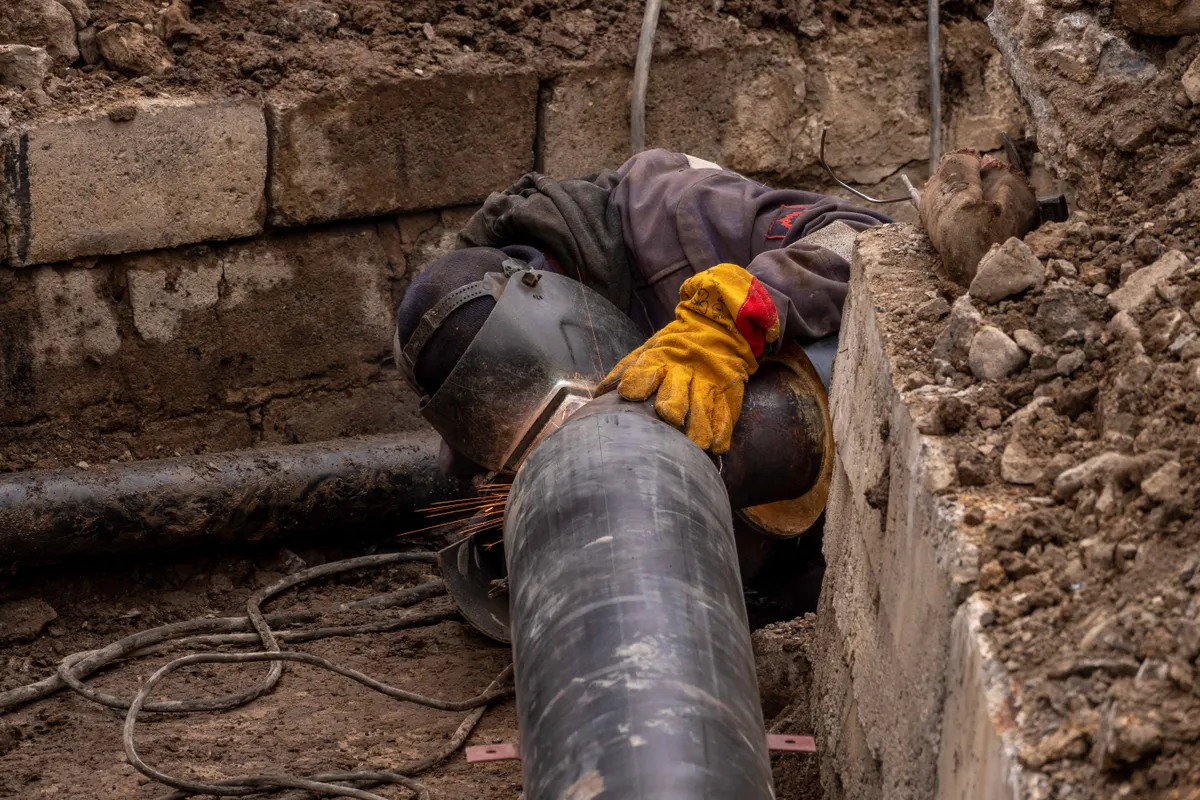
Repair begins with understanding the problem. The provider you are connected with will ask about the symptoms, which fixtures are affected, and whether the trouble is new, recurring, or getting worse, and will usually start with an inspection before recommending a repair. In an emergency, the first goal is to stop the backup from getting worse and to find the cause: a camera inspection shows whether the line is blocked, cracked, bellied, or broken, and where along the line the problem sits. That information decides whether the line needs clearing, a spot repair, or a longer section replaced.
Emergency help in Aurora is about getting connected quickly, not about a promised arrival time. A backup with sewage coming up through a drain is urgent, and the provider you are connected with can explain what to do about water use while you wait, what the first visit will cover, and what to expect from the inspection. Trenchless methods are sometimes discussed for Aurora lines, but suitability depends on inspection: a trenchless repair needs a line that can accept it, with enough remaining structure and a suitable route, and a collapsed or badly bellied section may not qualify. Confirm licensing, insurance, and pricing directly with the provider before work begins.
Signs of a sewer line problem in Aurora, in detail
A backup is the clearest sign and the most urgent: sewage coming up through a floor drain, shower, or toilet means the line serving the home is blocked or restricted, and water use should be limited until a provider has looked at it. Several drains slowing at the same time, or gurgling toilets and drains when water runs elsewhere, point to a shared line problem rather than a single fixture, because the fixtures share the main line that carries waste away from the home. A sewage smell indoors or near a drain can come from a dry trap, a vent issue, or a leak or break in a line, and it should not be ignored even when nothing is backing up yet.
Outside signs matter too. A soggy or sunken patch in the yard, a strip of grass that stays greener than the rest, or ground that settles along the line route can all point to a leaking section of line, and trouble that returns after a drain clears briefly usually means the underlying cause is still there. Roots, a damaged section, or a recurring restriction all need an inspection to identify, because clearing a drain treats the symptom without showing what is happening inside the line. When you call, describe which fixtures are affected, in what order the problem appeared, and whether it changes with rain or with water use elsewhere, so the provider starts with the clearest picture possible.
What a camera inspection actually covers
A camera inspection sends a small camera through the sewer line so the inside of the line can be viewed directly. The provider can see blockages, roots, cracks, breaks, bellies where water pools, and joints that have shifted, and can usually tell where along the line each problem sits. That information is what separates a guess from a plan: it shows whether the line needs clearing, a spot repair, or a longer section replaced, and it shows whether a trenchless method is even possible for that line.
Trenchless methods are sometimes discussed for Aurora lines, but suitability depends on inspection. A trenchless repair needs a line that can accept it, with enough remaining structure and a suitable route, and a collapsed or badly bellied section may not qualify. The inspection also gives you something concrete to ask about: what the camera showed, where the problem is, what options fit what was found, and what each option includes in its pricing. Confirm licensing, insurance, and pricing directly with the provider before work begins.
Service area: Aurora, Illinois
This page serves Aurora in Kane, DuPage, Kendall, and Will counties, Illinois, including downtown Aurora, the east side and west side of Aurora, and areas around the Fox River, the Orchard Road corridor, and the Route 59 corridor. If you are in Aurora and unsure whether your address is covered, call and say Aurora and your ZIP code, and we will connect you with an independent local provider serving that area.
What to have ready when you call
- Your Aurora address area and ZIP code.
- Which fixtures are affected, and in what order the problem appeared.
- Whether the problem changes when water is used elsewhere, or after heavy rain.
- Whether the trouble is new, recurring, or getting worse, and what has already been tried.
- Any recent digging, tree work, irrigation changes, or ground changes near the line route.
- Whether neighbors have similar trouble, which helps separate a single-home line problem from a wider problem.
How calling works
- Call – call (607) 376-4949. Working hours: 24/7.
- Tell us your city and problem – say Aurora and your ZIP code, and describe what you are seeing.
- Get connected – we connect you with an independent local provider.
- Confirm before work begins – confirm licensing, insurance, and pricing directly with the provider.
Questions to ask the provider
- Are you licensed and insured for this work, and can you confirm that before work begins?
- What will the inspection cover, and will you explain what the camera shows?
- What repair options fit what the inspection found, and why?
- Is a trenchless method suitable for this line, and what would make it unsuitable?
- What is the total pricing, and what does it include?
- What should we do about water use while we wait?
Frequently asked questions about emergency sewer line repair in Aurora, IL
What counts as a sewer emergency in Aurora?
Sewage backing up through a drain, toilet, or shower is an emergency, because it means the main line is blocked or restricted and the home cannot safely use its plumbing. Several drains failing at once, or a backup that returns quickly after clearing, also counts as urgent. A slow drain on its own is less urgent, but it still deserves attention before it becomes a backup.
What should we do while we wait for help in Aurora?
Limit water use: do not run the washing machine or dishwasher, and avoid flushing affected toilets. Keep children and pets away from any standing sewage, and avoid contact with it. Note which fixtures are affected and in what order the problem appeared, so you can describe it clearly when the provider arrives.
Can I get emergency help in Aurora at night or on a weekend?
Working hours are 24/7, so you can call at any time. Emergency help means getting connected quickly with an independent local provider; the provider you are connected with can explain what the first visit will cover and what to do about water use while you wait. No arrival time is promised.
Will a trenchless repair work for my Aurora sewer line?
It depends on what an inspection finds. Trenchless methods suit some lines and not others, and a collapsed, badly bellied, or badly aligned section may not qualify. A camera inspection shows the line’s condition and route, and the provider can explain which options fit what was found.
Call (607) 376-4949. Working hours: 24/7. For emergency sewer line repair in Aurora IL, say Aurora and your ZIP code, describe what you are seeing, and we will connect you with an independent local provider. See Emergency Sewer Line Repair, Illinois, Browse by state, or Home.
Sewer Line Repair is a referral service, not a plumbing provider. Callers are connected with independent local providers. Confirm licensing, insurance, and pricing directly with the provider before work begins.
Contact: hello@sewerlinerepair.online