
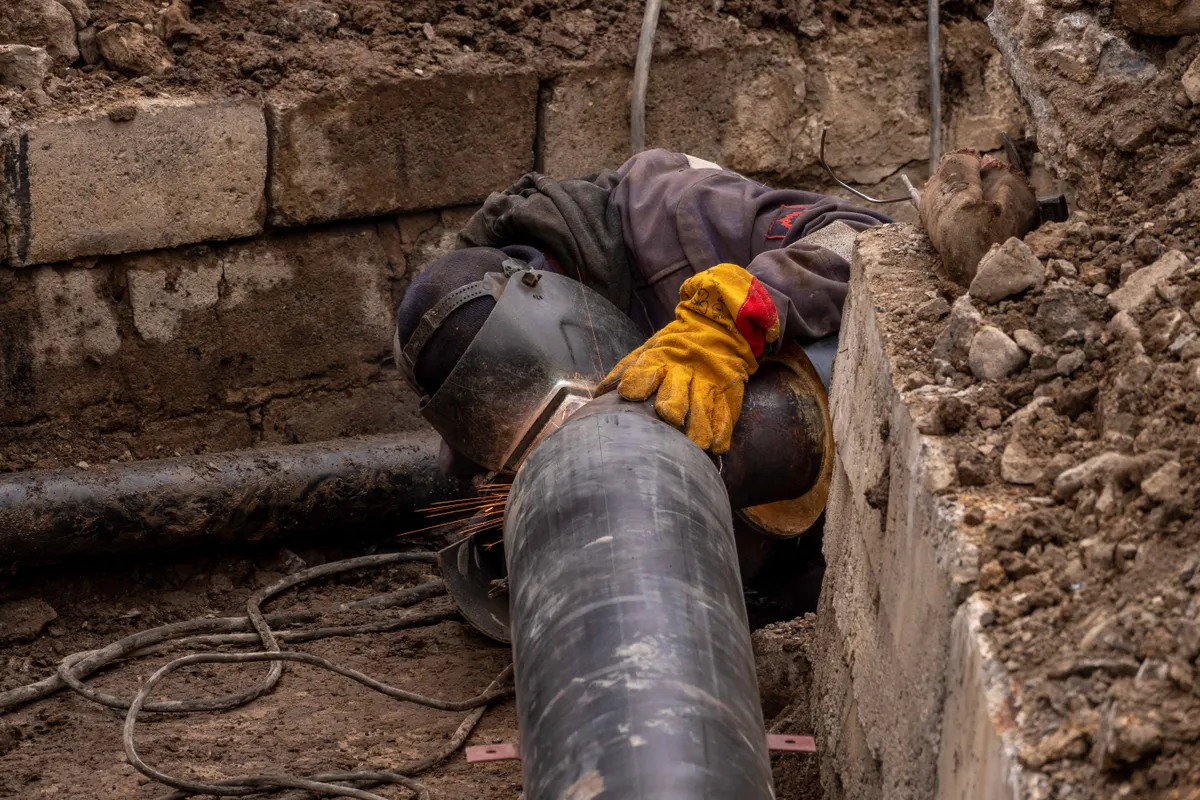
Several drains slowing at once, a gurgling toilet, or a sewage smell that will not go away can point to a sewer line problem in Mississippi.
This page lists the live service area in Mississippi and explains what to do right now, how calling works, and what to have ready.
Working hours: 24/7
Service areas in Mississippi
Jackson — Sewer Line Repair
Sewer line repair in Jackson, the state capital, covering homes and businesses across the city, including downtown, Fondren, and Belhaven.
Jackson is currently the only live service area listed for Mississippi on this site.
If your property is elsewhere in Mississippi, call with your ZIP code and ask which provider serves your area.
What to do right now
If sewage is backing up, limit water use right away and note what you see before you call.
- Limit water use. Do not run the washing machine, dishwasher, or showers until the problem is understood.
- Note which fixtures are affected, and in what order the problem appeared.
- Note whether the trouble changes when water runs elsewhere, or after heavy rain.
- Keep people and pets away from water from a backup.
- Do not force a blocked line with a makeshift tool.
- Do not dig. Leave digging to the provider and the utility marking process.
- Do not pour chemical drain cleaner into a backed-up line.
- Note any soggy or sunken patch in the yard, or a strip of grass that stays green while the rest dries out.
- Call (607) 376-4949, day or night, and say Jackson and your ZIP code.
Signs to note
The signs below are starting points for the call, not a diagnosis. Only an inspection can show what is happening inside the line.
| Sign | What it can mean |
|---|---|
| Several drains slowing at once | A shared line problem, not a single fixture trap |
| Gurgling toilets or drains | Air movement from a partial restriction in the line |
| Sewage smell indoors or near a drain | A dry trap, a vent issue, or a leak or break |
| Sewage backing up from a low drain or toilet | A blockage or restriction in the main line |
| Soggy or sunken patch in the yard | A leaking section, or ground settling around it |
| Strip of grass that stays green while the rest dries | Moisture escaping from a damaged section |
| Trouble that returns after a drain clears briefly | Roots, a damaged section, or a recurring restriction |
| Trouble that appears after heavy rain | Water entering the line, or saturated ground pressing on it |
Tell the provider which signs you see, and when each one started. Timing and weather changes help the provider decide what to inspect first.
Sewer line repair across Mississippi
Jackson is the capital of Mississippi and the county seat of Hinds County. Parts of the city extend into Madison and Rankin counties.
Jackson sits in central Mississippi on the Pearl River. Older neighborhoods, including downtown, Fondren, and Belhaven, sit alongside newer subdivisions on the north and east sides.
Older homes are more likely to have older materials and joints. Newer homes are more likely to have newer plastic lines, and the two age groups tend to show different kinds of trouble.
Ground in the Jackson area is dominated by clay soils, including the well-known Yazoo clay. Yazoo clay expands when wet and shrinks when dry, and that movement can stress joints and sections of line over time.
Jackson has a humid subtropical climate with hot summers and frequent heavy rain. Low-lying ground near the Pearl River and its tributaries can stay wet longer after storms.
Mississippi runs from the flat Mississippi Delta in the northwest, through rolling hills in the north and center, to the Gulf Coast in the south. Lines face different conditions in each part of the state.
In the Delta, low flat ground and a high water table mean yards and streets can hold water after heavy rain. Saturated ground puts extra pressure on lines.
In the hill country and central Mississippi, clay soils that expand and shrink with moisture move around buried lines. On the Gulf Coast, low-lying coastal ground, sandy soils, and tropical storms bring standing water and saturated soil.
Housing age matters across Mississippi as much as geography. Older towns and neighborhoods have lines that may have been in the ground for decades, with joints and materials that age differently from plastic lines in newer subdivisions.
Trees matter in Jackson because mature oaks, pines, magnolias, and other large yard and street trees are common in older neighborhoods. Their roots seek moisture in dry stretches, and irrigation, small leaks, and moist soil near a line can draw roots toward it.
If trouble returns after a drain clears briefly, or appears after heavy rain, say so when you call. Both patterns help the provider decide what an inspection should look at first.
How calling works
Calling takes a few minutes. Have your city, ZIP code, and a short description of the problem ready.
- Call (607) 376-4949. Working hours are 24/7.
- Say your Mississippi city and ZIP code, and describe what you are seeing.
- You are connected with an independent local provider serving your area.
- The provider asks about fixtures, timing, and any recent ground or weather changes.
- Confirm licensing, insurance, and pricing directly with the provider before work begins.
What to have ready
A short list of details makes the call faster and helps the provider judge what to inspect first.
- Your Mississippi address area and ZIP code.
- Which fixtures are affected, and in what order the problem appeared.
- Whether the problem changes when water is used elsewhere, or after heavy rain.
- Whether the trouble is new, recurring, or getting worse, and what has already been tried.
- Any recent digging, tree work, irrigation changes, or ground changes near the line route.
- Whether neighbors have similar trouble, which helps separate a single-home problem from a wider one.
- The age of the home, and any repair history for the line.
- Whether the property is a house, a multi-unit building, or a business.
How to describe the problem
Describe what you see in plain terms. The provider does not need technical language, just clear facts.
- Start with the first sign you noticed, and when it began.
- List the fixtures affected, from the first to the most recent.
- Say whether the trouble is steady, comes and goes, or follows heavy rain.
- Mention any yard changes, such as a soggy patch or a strip of grass that stays green.
After the call
After the call, the provider arranges the next step with you directly. Keep these points in mind while you wait.
- Limit water use if the provider advises it, especially during a backup.
- Keep the notes you made about fixtures, timing, and yard signs handy.
- Ask who will visit, and what access they will need.
- Write down anything the provider asks you to watch for before the visit.
Camera inspection: what to ask
A camera inspection sends a small camera through the sewer line so the inside of the line can be viewed directly. The camera shows the condition of the line, and the location and type of any blockage or damage.
That information matters in Mississippi, where clay soil movement, root growth, and water infiltration can each produce similar symptoms but call for different repairs.
A trenchless method is only considered after an inspection. It depends on the line’s condition, its route, and what the camera shows.
- Ask the provider to explain what the camera found, in plain terms.
- Ask what repair options fit what was found, and why.
- Ask what each option includes, and what to confirm before work begins.
Repair methods in plain terms
Repair choices depend on what the inspection finds. The provider explains the options that fit your line.
- Spot repair fixes one damaged section of line.
- A longer run replaces a longer stretch where damage is widespread.
- Trenchless methods repair or replace a line with less digging, where the line suits them.
- Open-trench repair digs to reach and replace the damaged section directly.
- Cleaning clears a blockage, but it does not fix a break, a sag, or a joint problem.
A lateral line runs from a building to the main line, and a main line carries waste from several buildings or a street. Say whether one building or several are affected, so the provider can judge which line is involved.
What to confirm before work begins
Confirm these points with the provider, in writing where possible, before any work begins.
- Licensing and insurance for this work.
- The written scope: what will be done, and where.
- Total pricing, and what it includes.
- Whether a camera inspection is included, and whether you will see its findings.
- What happens if the inspection finds a different problem than expected.
- What restoration, if any, follows the repair.
After repair: records to keep
Keep the written scope, the pricing agreed before work, and any photographs or recording from the inspection. These records show what was done and why.
Keep notes on the date of the work, the provider’s name, and any follow-up advice. Future providers will ask about this history if trouble returns.
If you rent out the property or manage it for an owner, pass the records to the owner. Clear records help the next provider and the next tenant alike.
For rented or managed properties
If you rent, tell the landlord or property manager early, and pass on what the provider finds. Repairs to a shared or building line usually need the owner’s approval.
If you manage a property, say how many units or businesses share the line, and whether others are affected. Access is usually scheduled around operating hours for businesses.
If your property is not in Jackson
If your property is not in Jackson, you can still call. Say your city and ZIP code, and ask which independent local provider serves your area.
If no provider serves your area yet, the call still helps you describe the problem clearly. Note the fixtures, timing, and yard signs so you can pass them on.
Frequently asked questions
Can you help anywhere in Mississippi, or only in Jackson?
Jackson is the only live service area listed for Mississippi right now. Callers elsewhere can still call with a ZIP code and ask which provider serves their area.
Why do sewer problems in Mississippi sometimes appear after heavy rain?
Heavy rain saturates ground and can push water into an aging or damaged line. Low-lying ground near rivers stays wet longer, which adds pressure on buried lines.
Do older homes in Mississippi have different sewer problems than newer subdivisions?
Yes. Older homes are more likely to have older materials and joints, while newer homes usually have plastic lines. Each age group tends to show different trouble.
Will a trenchless repair work for my Mississippi sewer line?
It depends on the line’s condition, its route, and what a camera inspection shows. Ask the provider to explain which options fit your line, and why.
What should I do first if sewage is backing up?
Limit water use right away, and keep people and pets away from water from a backup. Then call (607) 376-4949 and describe what you see.
What does Yazoo clay do to sewer lines?
Yazoo clay expands when wet and shrinks when dry. That movement can stress joints and sections of line over time, especially after dry summers and heavy rain.
Can tree roots cause sewer line trouble in Jackson?
Yes. Mature oaks, pines, and magnolias are common in Jackson’s older neighborhoods, and their roots seek moisture near lines. Roots are a common cause of recurring blockages.
What should I have ready before I call?
Your city and ZIP code, the fixtures affected, and the order the problem appeared. Also note whether it changes with water use elsewhere, or after heavy rain.
How do I know if the problem is my line or a wider one?
Ask whether neighbors have similar trouble, and note whether several drains slow at once. A single slow fixture usually points to that fixture, not the shared line.
Do I need a camera inspection before choosing a repair?
Yes, in most cases. The camera shows the condition of the line and the type of damage, so the repair can fit what was actually found.
What should I confirm before work begins?
Licensing, insurance, and total pricing, directly with the provider. Also confirm the written scope, and what the inspection findings show.
Sewer line repair in Mississippi: call now
Call (607) 376-4949 any time. Working hours are 24/7.
For sewer line repair in Mississippi, say your city and ZIP code, describe what you see, and ask to be connected with an independent local provider.
Sewer Line Repair is a referral service, not a plumbing provider. Callers are connected with independent local providers. Confirm licensing, insurance, and pricing directly with the provider before work begins.