
Sewer line repair in Billings, MT
Find sewer line help in Billings, Montana, by starting with what you are seeing at home. Each section on this page explains what to do right now, what the signs can mean, and what a camera inspection covers before any repair is chosen, so you can describe the problem clearly when you call.
Sewer Line Repair is a referral service, not a plumbing provider. Callers are connected with independent local providers, and licensing, insurance, and pricing should be confirmed directly with the provider before work begins.
Working hours: 24/7
What to do right now
If sewage is backing up into a tub, shower, or floor drain in Billings, limit water use in the home right away and avoid contact with sewage. Do not keep flushing or running taps to test the line, because that can push more water into a line that is already blocked or damaged and make the backup worse.
If only one drain is slow, note whether other fixtures in the home are also slow, gurgling, or backing up. A problem that affects several fixtures at once, or that shows up at the lowest drain in the home, is more likely to involve the main sewer line than a single fixture drain, and that distinction helps the provider plan the visit.
When you call, have your street address ready, along with any information you already know about the home, such as its approximate age, whether sewer work has been done before, and whether the trouble follows spring thaw or heavy rain. Clear, simple notes about what you have seen and when it started are more useful than a guess about the cause.
Symptoms and likely causes in Billings
| What you notice | What it can point to |
|---|---|
| Sewage backing up into a low fixture | A blockage or break in the main line serving the home. |
| Several drains slow at the same time | A shared line restriction, such as roots or a damaged section. |
| Gurgling sounds from drains or toilets | Air trapped by a partial blockage or a venting problem. |
| Sewer smell inside or near the home | A cracked line, a dry trap, or a faulty connection. |
| Wet or unusually green patch in the yard | A leak that is feeding one area of soil and grass. |
| Trouble that returns after thaw or rain | Groundwater, saturated soil, or a line affected by ground movement. |
Local sewer factors in Billings, Montana
Billings, in Yellowstone County, sits in south-central Montana, on the Yellowstone River and near the Rimrocks. Winters here are long and cold, with deep frost, and spring thaw can saturate the soil as snowmelt and rain arrive together. That seasonal cycle matters because ground that freezes and thaws can shift around a sewer line, and a line that already has a weak joint or a small crack can show trouble sooner after thaw than it would in drier, more stable conditions.
Housing age matters in Billings as well. The city includes older homes in established neighborhoods as well as newer subdivisions, so line materials and ages vary a good deal from one street to the next. Older lines may have joints that have opened over time, while newer lines can still be affected by roots where trees stand near the line route. Cottonwoods, spruce, and other trees common in Billings yards can send roots toward the moisture in a sewer line, and roots are a common cause of recurring blockages where a joint has opened up.
The layout of a Billings home also shapes the questions a provider will ask. Many homes have basements, where the lowest drain is often a floor drain, and a backup there is one of the earliest signs of a main line problem. Where the line runs, how deep it is buried, and what sits above it, such as a driveway, patio, or mature tree, all affect how a repair is planned. In Montana, lines are often buried deeper than in warmer states, in part because of frost, and that depth is part of what a camera inspection helps to establish.
Sewer line repair in Billings, in detail
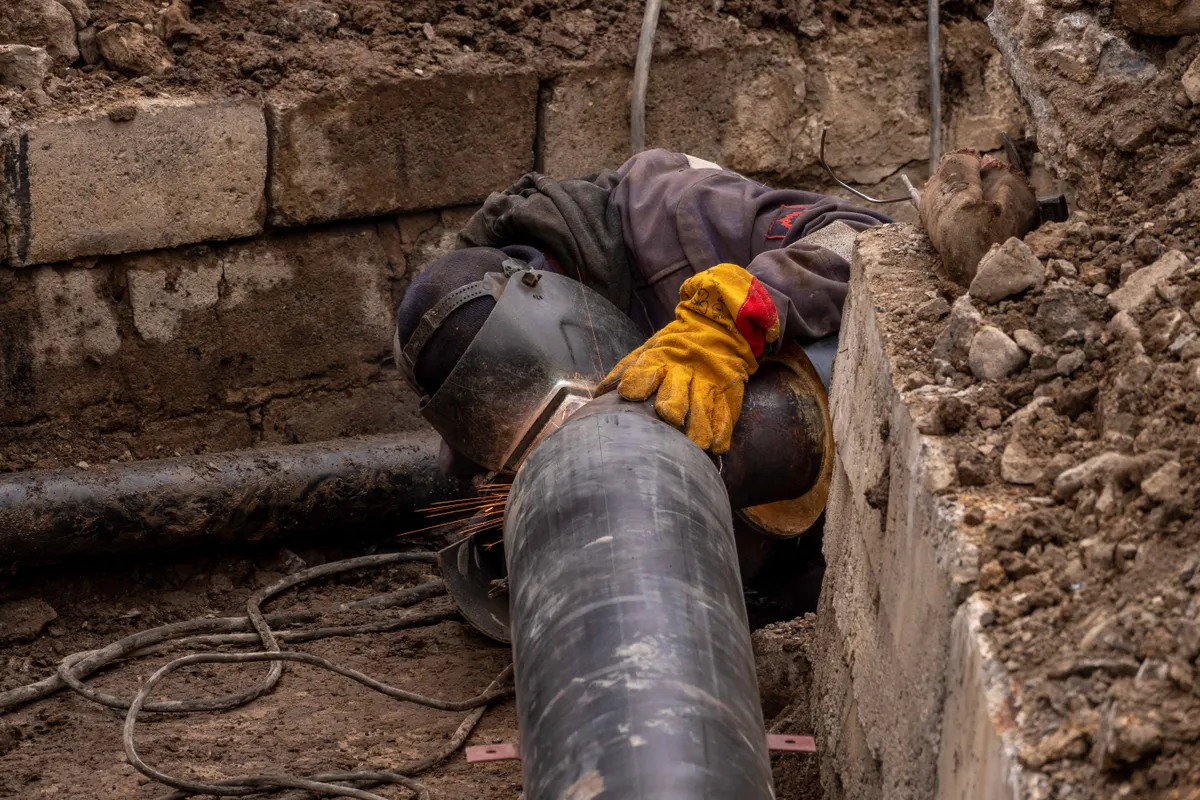
Sewer line repair in Billings starts with understanding the line itself: what it is made of, where it runs, how old it is, and where the problem sits along its length. A camera inspection is the usual way to answer those questions, because it shows the inside condition of the line rather than leaving the provider to guess from the symptoms alone. The findings then shape the options, which can range from clearing a blockage to repairing a single damaged section or replacing a longer run of line.
Repair options depend on what the inspection finds. Some lines need a spot repair at a single damaged joint or cracked section, while others need a larger section replaced because the damage is spread along the line. In Billings, the depth of the line, the seasonal movement of the ground, and what sits above the line, such as a driveway, patio, or mature tree, all affect which approach is practical. A provider should explain the findings in plain terms, including where the problem is and why the suggested approach fits those findings, before any work begins.
Signs of a sewer line problem in Billings, in detail
Backups are the most urgent sign. If sewage is coming up through a floor drain, tub, or shower, limit water use, keep people and pets away from the affected area, and call (607) 376-4949. Backups that return after a line has been cleared are especially worth noting, because a blockage that keeps coming back often points to a structural problem in the line, such as roots, a break, or a section that has shifted, rather than a one-time clog.
Outdoor signs deserve the same careful reading in Billings. A wet patch, a sunken area, or a strip of unusually green grass can point to a leak, but in spring, when thaw and rain both wet the soil, a wet yard alone does not prove a sewer problem. The combination matters: a wet patch that stays wet in dry weather, a smell near the same spot, or slow drains inside at the same time all make a sewer line cause more likely, and a camera inspection is the way to confirm it.
What a camera inspection actually covers
A camera inspection sends a small camera through the line to view its inside condition. It can show blockages, root intrusion, cracks, breaks, bellies where the line has sagged, and joints that have separated, and it can locate the problem along the line so the repair can target the right section. For a Billings home, that location detail matters, because it determines how much digging, if any, is needed and whether the work can be kept to one part of the yard.
Inspection also sets the limit for trenchless work. Trenchless methods are only an option where inspection shows the line is suitable for them, with enough remaining structure and a clear path for the method to work. Where the line has collapsed, lost its shape, or has damage that trenchless methods cannot address, a traditional repair may be the honest recommendation. Ask the provider to explain what the camera showed and how it supports the approach they suggest.
Service area: Billings, Montana
Help is available across Billings, including downtown Billings, the Heights, the West End, central neighborhoods, and the north, south, east, and west sides of the city, as well as nearby parts of Yellowstone County. When you call, give your Billings street address so the provider can confirm coverage for your neighborhood and plan the visit.
What to have ready when you call
- Your Billings street address and the best phone number to reach you.
- Which fixtures are affected, and whether the trouble is sudden or recurring.
- Any bad smell, gurgling, wet yard patch, or unusually green grass you have noticed.
- Whether the trouble follows spring thaw, heavy rain, or heavy water use in the home.
- The age of the home and any sewer work done before, if you know it.
- Whether large trees stand near the likely line route.
How calling works
- Call – call (607) 376-4949.
- Tell us your city and problem – say you are in Billings and what you are seeing.
- Get connected – we connect you with an independent local provider.
- Confirm before work begins – confirm licensing, insurance and pricing directly with the provider.
Questions to ask the provider
- Are you licensed and insured to work in Montana?
- Will a camera inspection be done before a repair approach is chosen?
- What did the inspection show, and where along the line is the problem?
- What repair options fit those findings, and what does each one involve?
- What is the pricing, and what is included before work begins?
- What should we watch for after the repair, and who do we call if trouble returns?
Frequently asked questions about sewer line repair in Billings, MT
Can I get help anywhere in Billings?
Help is available across Billings, including downtown, the Heights, the West End, and the north, south, east, and west sides of the city. Give your street address when you call so coverage for your neighborhood can be confirmed.
Why do Billings problems appear after spring thaw?
Spring thaw saturates the soil as snowmelt and rain arrive together, and water can enter a damaged line or press on a weakened section. If drains slow or back up mainly after thaw, mention that pattern when you call, because it helps the provider judge what the inspection should look for.
Are older Billings homes more likely to have sewer line problems?
Older homes can have older line materials and joints that have had more time to wear, shift, or admit roots, but newer homes are not immune, especially where trees stand near the line route. Age is one factor among several, and a camera inspection is what confirms the actual condition of a given line.
Can trenchless repair be used for any Billings sewer line?
No. Trenchless methods are only an option where a camera inspection shows the line is suitable for them. A collapsed line, a line that has lost its shape, or damage that trenchless methods cannot address may need a traditional repair instead.
Call (607) 376-4949. Working hours: 24/7.
Services | Montana | Browse by state | Home
Sewer Line Repair is a referral service, not a plumbing provider. Callers are connected with independent local providers, and licensing, insurance, and pricing should be confirmed directly with the provider before work begins.
Contact: hello@sewerlinerepair.online.